Almsee – Starting the Milky Way Core Season in the Austrian Alps
Starting the Milky Way core season at Almsee: star tracker, H‑alpha tests and a sunrise finish.
Almsee – Start of the Milky Way Core Season in the Alps
My second Astro-Vlog showing behind-the-scenes and highlights from the Almsee shoot. I try to explain the process and share tips for shooting with a star tracker and H‑alpha imaging. The video also includes a short timelapse showing the tracked sky, some sunrise shots and a peek at the editing process.
Since March the Milky Way core has been visible again from the northern hemisphere so I was excited to start the season. In the weeks before I was looking for a nice location with an interesting foreground and a clear view to the south. After hours of browsing through Google Maps and checking various apps I decided to start the season at Almsee. Almsee is a quiet alpine lake surrounded by dramatic peaks — a perfect location to return to with new equipment and techniques.


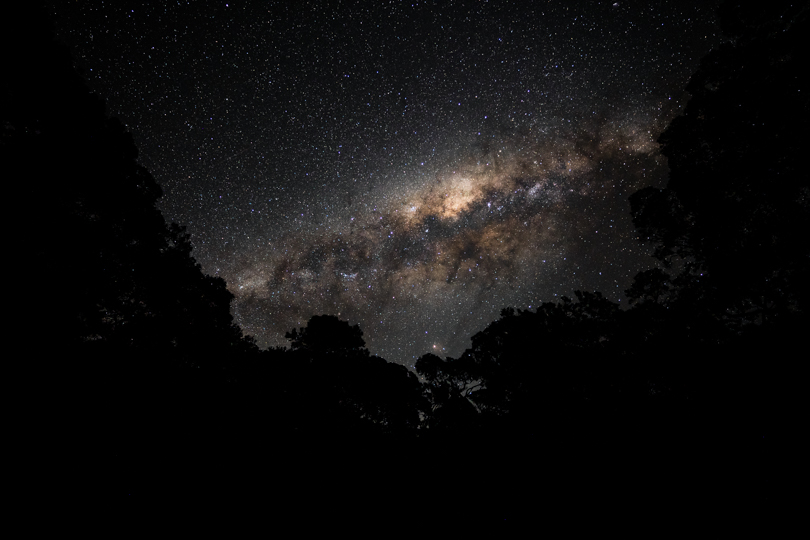
But why the Milky Way core? The core is the brightest and most photogenic part of our galaxy, packed with stars, nebulae and cosmic wonders. It’s a favorite target for astrophotographers, and I wanted to capture it with my new gear and techniques. As mentioned, the core is visible in the northern hemisphere from March to October, and in March/April it rises very early — around 3 a.m. — which means you either have to sleep near the planned photo location or get up very early. It also rises close to the horizon early in the season, so you need a location with a clear view to the south.
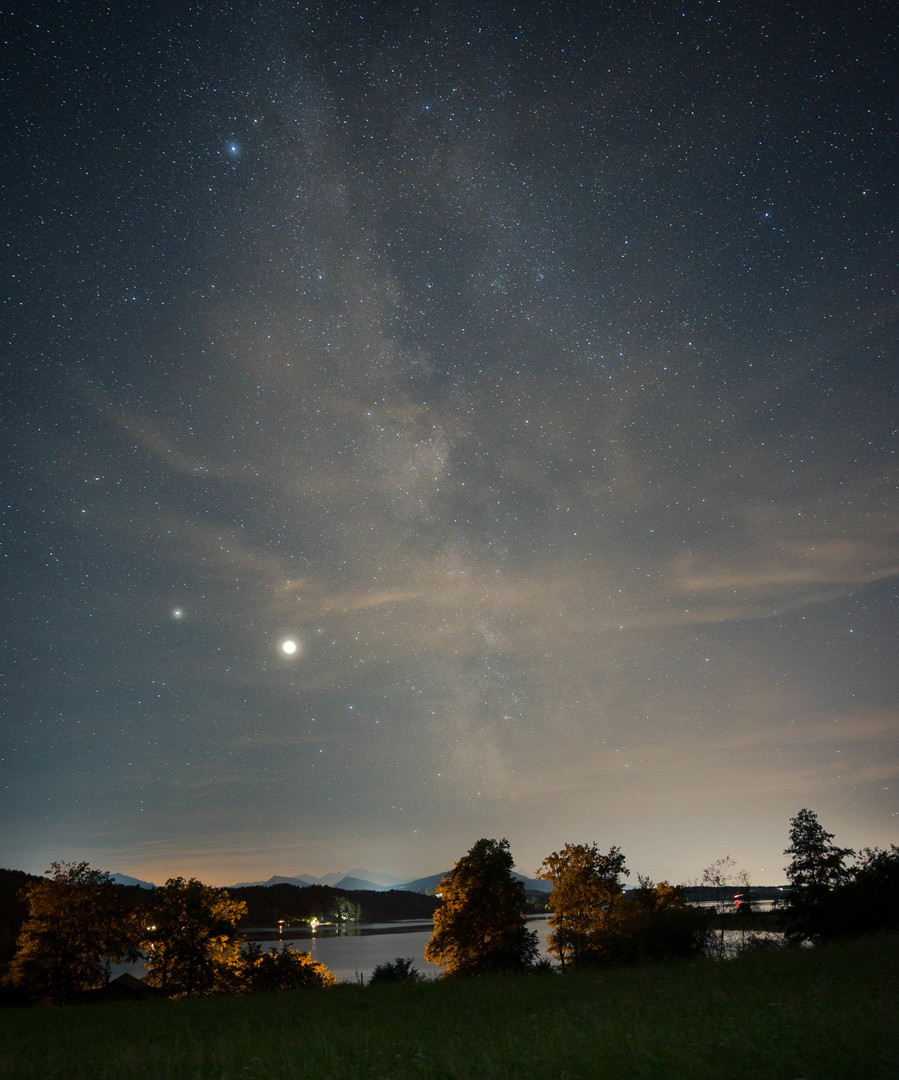
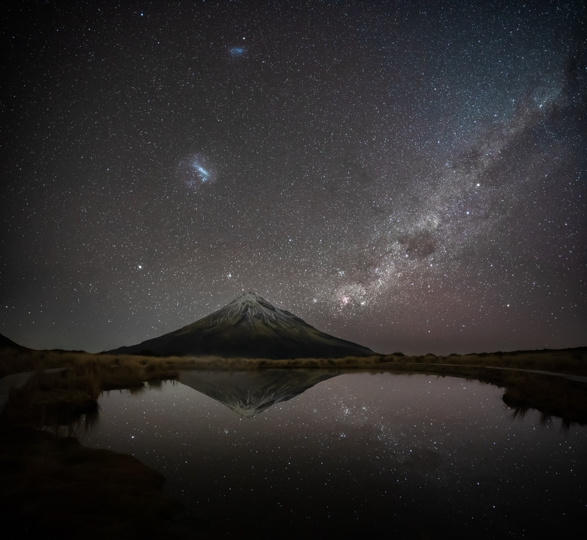
I also tried to capture other parts of the Milky Way in January and February. Funny enough, I experimented with the winter constellations south of the Almsee mountain range at Hinterstoder — at Schiederweier, a place often listed among Austria’s most beautiful spots. I also photographed the winter Milky Way at Leopoldsteinersee, where I met Viktor who runs the boat rental and kindly let me use the jetty for an amazing view on the night sky. Thank you, Viktor.


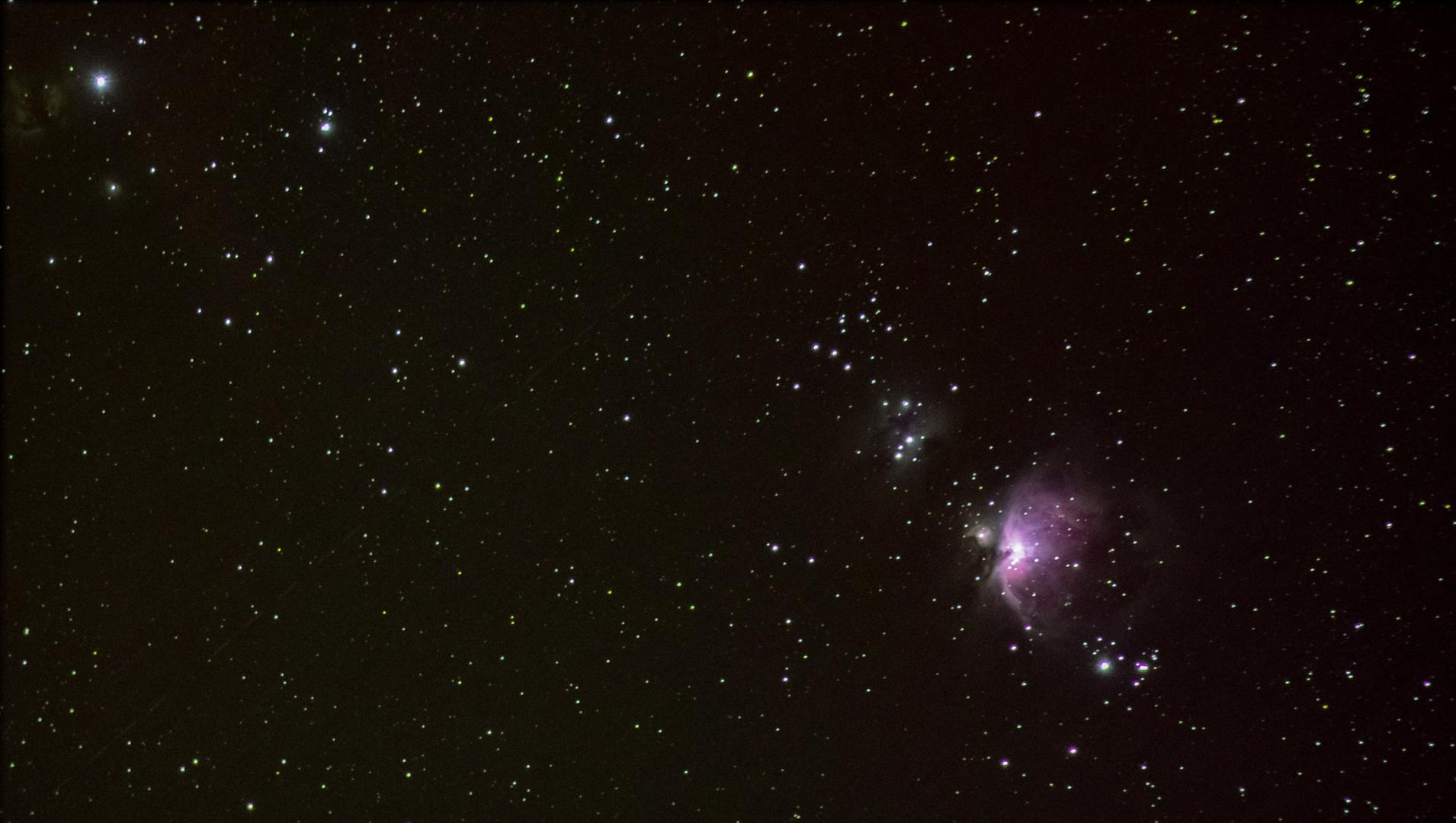
You can find the two images of Hinterstoder and the Leopoldsteinersee below. For these images I used my new H‑alpha filter, which captures the red light emitted by hydrogen in nebulae — adding a new dimension to my astrophotography and revealing extra detail and color in the Milky Way.
Frozen Silence - Winter Milky Way at Leopoldsteinersee

Click to open image
Frozen Reflections: Winter Milky Way over Großer Priel

Click to open image
The night hike to the Ameisstien
Since I chose Almsee with the mountain range to the south as my location, I looked for a higher vantage point. The spot I selected was Ameisstein, a small peak above the lake. The trail was described as very steep and tricky to find in the dark, so I gathered as much route information as possible online and started the hike with plenty of time to spare.


Hiking to a night photography location is always an interesting experience. Don’t let your imagination run into horror scenarios — you soon notice the sounds of animals and the wind, which can feel intense at first but also create a very peaceful atmosphere. In the end, you often have nature and the night sky entirely to yourself.


For the Almsee hike the first part was an easy, well-marked gravel trail through the forest. After a while it turned into a steep, narrow forest path that required more attention, but it remained manageable to follow.
After about 30 minutes of hiking I reached the planned spot I had marked on Google Maps a few days earlier. Interestingly, there were also three other photographers nearby trying to capture the night sky that same night.
Tracking, H-alpha filter and Foreground exposures
As mentioned, this time I brought more equipment than on previous trips: a Move Shoot Move star tracker and an H‑alpha clip filter. A star tracker is a device that compensates for the Earth’s rotation, enabling much longer exposure times without visible star trails. This is especially useful for capturing the Milky Way’s core, where longer exposures are needed to reveal fine structure and color.
The tracker works by rotating on a single axis at the same speed as the Earth, but in the opposite direction. This keeps the camera aligned with a fixed point in the sky, allowing long exposures without the stars appearing to move. For this to work properly, the rotation axis must be aligned with the Earth’s rotational axis — in the northern hemisphere this means pointing toward Polaris.
In my case I used the Move Shoot Move star tracker together with a small polar scope attached to it. I first aligned the system roughly with an app and then fine-tuned it using the polar scope. Once everything was set up correctly, the tracker allowed long-exposure astrophotography, where the main limitation was the accuracy of the alignment rather than the focal length.
Since I was shooting at a relatively wide focal length of 24 mm, I could theoretically take exposures of several minutes without star trails. Instead, I opted for shorter exposures over several hours. This lets me periodically verify alignment, create material for a timelapse of the tracked night sky (as shown in the video), and stack images into a single low-noise, high-detail result.
Additionally, I used an H‑alpha clip filter, which isolates the red light emitted by hydrogen gas in nebulae. This wavelength is often blocked by standard camera filters, so the H‑alpha data significantly enhances emission regions and can be blended with broadband stacks to reveal more structure.


From the same tripod position I also captured foreground images a few hours later with adjusted settings. For these I switched the star tracker off since the foreground is static, and I shot them closer to dawn to use the first natural light for revealing landscape detail.
In the end I combined the tracked sky image, the H‑alpha data and the foreground exposure into the final composite.


Final thoughts and next adventures
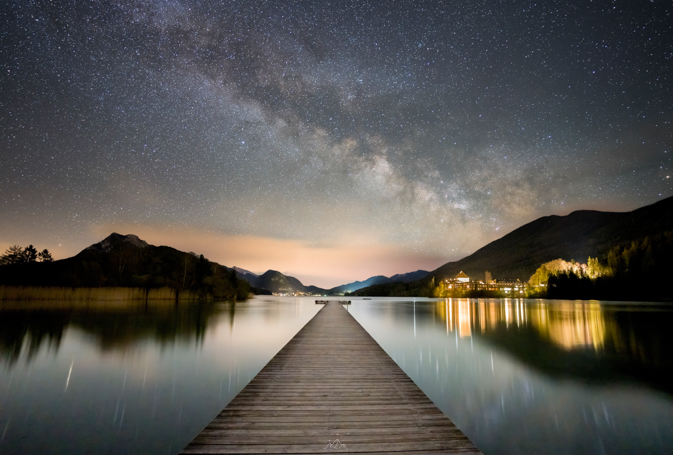
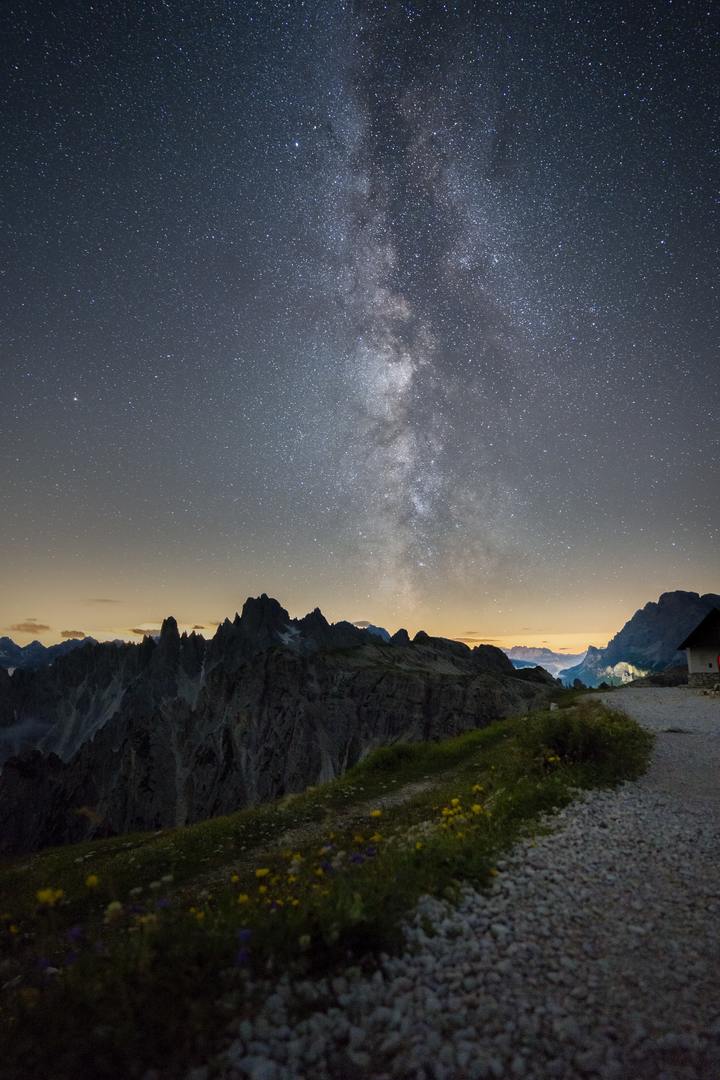
Overall, the Almsee shoot was a fantastic way to start the Milky Way core season. The combination of the star tracker and H‑alpha filter allowed me to capture stunning details in the Milky Way’s core, while the foreground exposures added depth and context. I’m already looking forward to the next adventures and can’t wait to share more images and stories. Also worth mentioning: the new feature that overlays star constellations and mountain names on some images — like this one.
Where the Alps Meet the Stars: Milky Way Rising over Almsee

Click to open image
